Victoria
Victorian farmers use crushed recycled glass to boost crop growth
Agricultural producers are utilising a silicon rich soil additive made from recycled glass bottles to naturally improve their crop yields.
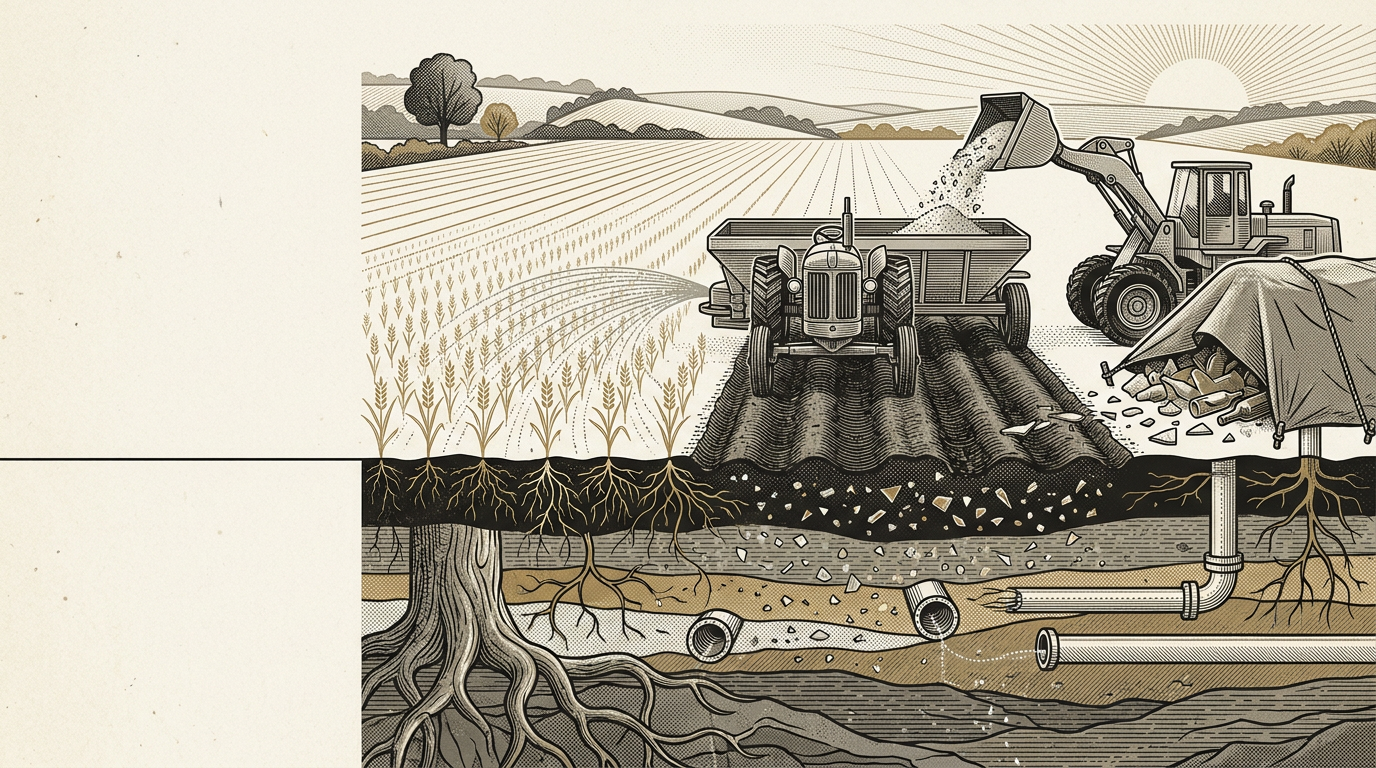
Victorian agricultural producers are adopting an unconventional soil treatment by spreading finely crushed recycled glass across their croplands. The practice is gaining traction as a sustainable method to enhance plant health while addressing a major waste management challenge.
According to a wire report, the recycled glass is being processed into a silicon rich soil additive. Farmers utilising the material report that it is noticeably improving crop growth, offering a practical use for millions of discarded glass bottles that might otherwise end up in landfill.
The application relies on the high silicon content inherent in glass. When crushed to a safe, fine consistency, the glass releases silica into the soil. Plants absorb this silicon, which strengthens their cell walls, improves water retention, and increases resistance to pests and disease. While the concept of using industrial byproducts in agriculture is not entirely new, the widespread use of post-consumer glass represents a significant step forward in circular economy initiatives.
Regional waste management authorities have long struggled with the stockpiling of glass bottles, particularly in areas where transport costs to major recycling facilities are prohibitive. By transforming these bottles into a local agricultural resource, the initiative offers a dual benefit of local waste reduction and soil improvement.
Details remain limited on the exact chemical formulations being used and the long-term cumulative effects of glass-derived silica on different soil types. Agricultural researchers are expected to conduct further field trials to determine the optimal application rates for various grain and vegetable crops.
Observers will be watching to see if Victorian agricultural bodies establish formal safety guidelines for the widespread application of glass-derived additives on food crops.
This report draws on original reporting by Wire report.
Dedicated to a Stronger Victoria.
A message from the editor, September
Every story here is free to read. Only readers keep it that way.
We take no government money, run no paywall, and answer to nobody in Spring Street. That independence is paid for by a small number of readers, not the many who benefit from it. If just one in a hundred of today's readers gave $8 a month, our Victorian politics coverage would be funded for the year.
- Funds reporting, not shareholders
- Cancel in one click, anytime
- Supporter badge and reply access
Prefer a one-off? Send a tip. It takes about twenty seconds.